China Qingdao Port: From Outpost To Powerhouse
When I talk about china qingdao port, I’m really talking about how a sleepy colonial outpost turned into one of the most important seaports on the Yellow Sea. You can feel that history the moment you step onto the waterfront—part German seaside town, part high-tech maritime hub wired into global trade routes from the U.S. to Europe.
German Colonial Roots
Qingdao’s modern port story starts at the end of the 19th century, when Imperial Germany seized the area and built a naval base and commercial harbor to secure its slice of the Yellow Sea maritime hub.
You still see the German imprint today:
- Red-roof villas and church spires watching over the bay
- Granite piers and breakwaters laid out with military precision
- Old warehouses that once handled Tsingtao port cargo now turned into cafés and galleries
Walking these streets, it’s easy to picture German officers planning Pacific routes where today we manage complex Qingdao seaport operations and global supply chains.
War, Turmoil, And New Beginnings
Qingdao’s strategic location made it a prize in every conflict:
- World War I: Japan and its allies forced Germany out, turning the port into a Japanese stronghold
- World War II: Qingdao again became a pivot point for naval campaigns across the Yellow Sea
- Post-1945: Control shifted multiple times until the founding of the People’s Republic of China in 1949
After 1949, the new government rebuilt Tsingtao port (as many Americans still call it) into a core Shandong trade routes hub, linking inland factories, mines, and farms to global markets.
Key Port Milestones
To really understand how the port leaped onto the world stage, I like to frame it as a simple timeline:
| Year | Moment | Why It Matters |
|---|---|---|
| 1984 | U.S. Navy visit | Marked the opening of Qingdao to American military and commercial ties, signaling new trust and cooperation. |
| 2011 | Korean port alliance | Deepened Northeast Asia logistics networks and sea-rail intermodal transport with Korea, boosting regional trade volumes. |
| 2020 | Dongjiakou expansion | Turned Dongjiakou into a bulk cargo handling powerhouse with a 400,000-ton ore terminal serving steel and energy demand worldwide. |
Each milestone pulled China Qingdao port deeper into international shipping, from U.S. grain and energy flows to Belt and Road Initiative port projects across Europe, Africa, and the Middle East.
The “Ghost Port” And Green Future
Today, what surprises most visitors from the United States isn’t the size of the harbor—it’s the silence. One of Qingdao’s container yards earned the nickname “ghost port” because it runs with almost no people in sight.
Here’s what’s going on behind that quiet:
- Automated container terminal Qingdao: Remote-controlled cranes and unmanned guided vehicles (AGVs) move boxes 24/7 with pinpoint accuracy.
- 5G and AI systems: Real-time tracking, energy optimization, and smart scheduling keep ships moving and cut operational costs.
- Hydrogen-powered upgrades (2022): Hydrogen fuel cell trucks and port equipment rolled out to reduce emissions and show what hydrogen-powered shipping in China can actually look like in practice.
This mix of automation and clean-tech doesn’t just make headlines—it directly supports reliable service for American importers and exporters who need consistent, low-risk access to East Asia.
Walk The History
If you’re in town, I always suggest a simple self-guided walking tour that lets you feel the port’s evolution in a single afternoon:
- Start at the old German Governor’s Residence and stone church district for colonial-era architecture.
- Stroll downhill toward the original waterfront and early Tsingtao port facilities.
- Continue along the coast until the historic scenery gives way to the cranes and container stacks of the modern Yellow Sea maritime hub.
As you move from red-tiled roofs to automated gantries, you’re walking the timeline of Qingdao port history—from empire outpost to a truly global gateway that now connects American consumers, Asian manufacturers, and world-class Qingdao waterfront attractions in one seamless flow.
Anatomy of China Qingdao Port
When I look at China Qingdao Port, I see one of the most efficient, high-tech seaports in the Yellow Sea region. If you’re shipping to or from China from the U.S., this is one of the key hubs you’ll touch—especially for Shandong trade routes and Belt and Road Initiative cargo.
Core Areas of Qingdao Seaport Operations
Qingdao is actually a cluster of terminals, each with a clear role. Knowing who does what helps you route freight smarter.
-
Dagang Port Area – General Cargo Hub
- Handles general cargo, breakbulk, and some Ro-Ro.
- Good for project cargo, machinery, and mixed loads.
- Close to the older urban area, so it’s handy for local distribution.
-
Qianwan Port Area – Container & Automation Center
- Main container terminal and the star of the port.
- Home to the automated container terminal Qingdao that everyone in logistics talks about.
- Ideal if you’re moving containerized goods from the U.S. West Coast (LA/LB, Oakland, Seattle/Tacoma) into North China.
-
Huangdong Port Area – Oil & Energy
- Focuses on oil tankers and liquid bulk.
- If you’re in energy, chemicals, or fuel-related supply chains, this is the piece of Qingdao you care about.
-
Dongjiakou Port Area – Bulk Cargo Powerhouse
- Built for bulk cargo handling: ore, coal, grain.
- Includes the 400,000-ton ore terminal, one of the largest of its kind.
- Crucial for U.S. exporters of grain, feed, and raw materials into North China’s industrial belt.
-
Weihai & Surrounding Logistics Zones
- Supports logistics, warehousing, and sea-rail intermodal transport.
- Ties into inland rail to reach North and Central China quickly.
You’ll see these terms on quotes, BLs, and tracking pages, so it’s worth recognizing each name.
Cargo, Trade Routes, and Capacity
Qingdao is a major Yellow Sea maritime hub with serious global reach:
- 700+ global trade routes connect Qingdao to North America, Europe, and Southeast Asia.
- 500+ liner calls per month, including all the big alliances.
- Capable of handling 24,000-TEU mega vessels, so it’s built for the biggest ships on the water.
- Strong sea-rail intermodal links push cargo inland quickly, which cuts transit times on China-side distribution.
For U.S. companies, that means:
- Better sailing frequency and less waiting for space.
- Strong options for midwest-bound cargo via rail from West Coast to Qingdao, or vice versa.
- Competitive rates thanks to high volume and top-tier infrastructure.
High-Tech Operations and Automation
Qingdao isn’t just big; it’s smart. The port invests heavily in tech to keep costs down and turn times fast.
-
Asia’s First Fully Automated Terminal
- Remote-controlled cranes, automated guided vehicles, and AI-assisted planning.
- Lower labor risk and higher reliability, especially during peak seasons.
- Faster vessel turnaround, which matters a lot if you’re watching demurrage and detention.
-
2025 Suspended Monorail for Containers
- A suspended monorail system moves containers above the yard, freeing up ground space.
- Reduces congestion in busy periods and keeps operations running smoother.
-
5G Smart Systems & Real-Time Data
- 5G-enabled control systems, smart scheduling, and IoT sensors.
- The port reports roughly $14.2 million in annual savings from these upgrades.
- For you, that translates into:
- More accurate ETAs
- Better visibility for your logistics team
- Lower risk of delays from yard congestion
If you’re managing U.S.–China shipping, this level of automation is a big selling point for routing via Qingdao.
Pro Tip: Views, Photos, and Safety
If you or your team ever travel onsite—for inspections, supplier visits, or just to understand the ground reality—there are a couple of things I always recommend:
-
Best Viewpoint: Jiaozhou Bay Bridge
- This bridge gives you a sweeping view of Qianwan and the broader Qingdao port area.
- It’s a solid spot for photography and video if you’re building content for your brand, investor deck, or internal presentations.
- Go early morning or near sunset for the best lighting.
-
Safety Around Industrial Zones
Anywhere near Dagang, Huangdong, or Dongjiakou:- Stay in authorized visitor zones; follow port guides and signs.
- Wear basic PPE if you’re entering operational areas: closed-toe shoes, high-vis vest, helmet if provided.
- Don’t wander close to cranes, stacking zones, or rail lines just for “better photos.”
- Always coordinate visits through your freight forwarder, port agent, or local partner.
Bottom line:
China Qingdao Port is a high-capacity, high-tech hub that works well for U.S. importers and exporters who care about reliability, automation, and access to North China’s manufacturing and consumer markets. If you’re planning new routes, or shifting from Shanghai or Tianjin, Qingdao deserves a serious look.
Getting to China’s Qingdao Port
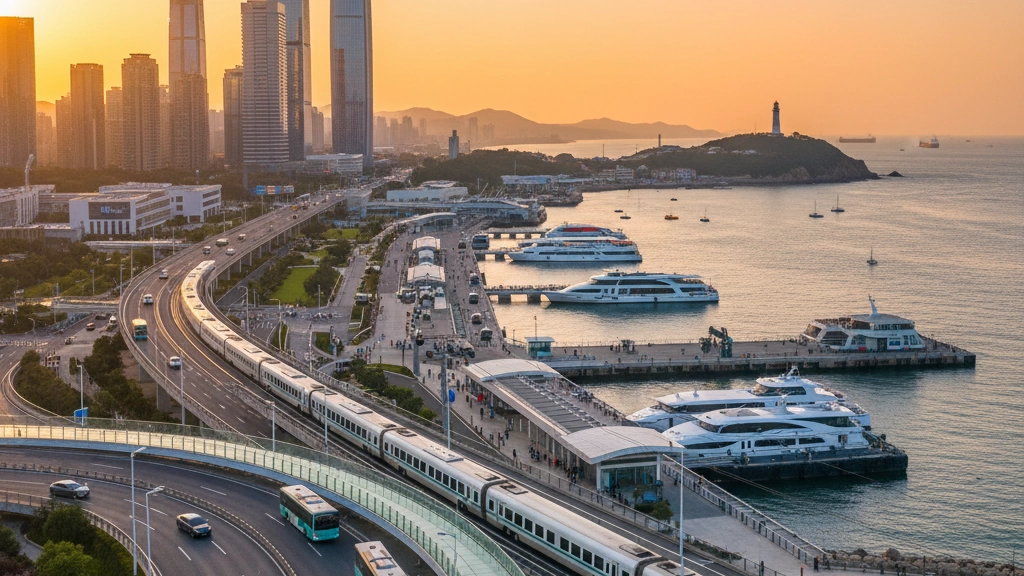
Air and Rail Access
If you’re flying in, Qingdao Liuting International Airport sits about 31 km from the main Qingdao port area.
- Taxi from airport to port: around CNY 80 (roughly $11–$13), 40–60 minutes depending on traffic.
- Rideshare: Didi is usually a bit cheaper and easy to use with an English interface and card support.
- High-speed trains: From Beijing and Shanghai, you can take G/D-class high-speed trains into Qingdao Station or Qingdao North. From there:
- Port taxi: 20–30 minutes from Qingdao Station
- Many hotels or cruise operators arrange port shuttles—worth asking ahead if you’re coming from the U.S. on a tight schedule.
If you’re combining business at the Yellow Sea maritime hub with sightseeing, I’d plan trains in and out and use the port shuttles as your backbone for timing.
Cruise and Ferry Arrivals
Qingdao’s main cruise facilities are centered around the 6th Wharf, which can handle ships up to 227,000 tons. For U.S. travelers on Asia cruise loops:
- Most international cruise lines docking in China’s Qingdao port use this terminal.
- You can track your ship in real time via MarineTraffic or VesselFinder—handy if you’re coordinating airport pickup, private tours, or meetings.
There are also regional ferries across the Bohai and Yellow Sea, more relevant if you’re linking Japan or Korea with Shandong trade routes.
Local Transport: Getting Around the Port and City
On the ground, getting around is straightforward, even if it’s your first time in China.
-
Didi (China’s Uber)
- Port to downtown: about CNY 18–30 depending on distance and time.
- Works with foreign cards in many cases; otherwise, you can link via Apple Pay or use cash taxis as backup.
-
Bike share
- Cheap and everywhere in the city core.
- Great for the waterfront, Olympic Sailing Center, and short hops near the cruise terminal.
-
Hydrogen buses & public transit
- Qingdao is leaning into hydrogen-powered buses around key corridors.
- Fares are low (usually CNY 1–2), and major stops are signed in pinyin, so English speakers can navigate.
Sample 1-Day Port-to-Downtown Plan
If your ship or cargo visit only gives you one free day:
- Morning: Didi from port to May Fourth Square and Qingdao Olympic Sailing Center for the waterfront and coffee.
- Midday: Walk or ride to the Tsingtao Beer Museum for lunch and a brewery tour—this ties in well with a broader Qingdao beer-focused visit.
- Afternoon: Head to the old town area, Zhanqiao Pier, and nearby colonial streets.
- Evening: Taxi or Didi back to port with at least 60–90 minutes buffer before boarding.
Seasonal and Visa Tips for U.S. Travelers
Timing your visit to China’s Qingdao port makes a big difference:
-
Summer (July–August)
- Peak season, warm and humid.
- Qingdao International Beer Festival draws big crowds—fun, but hotels book up fast and traffic near the waterfront gets heavy.
- Ideal if you want to mix port meetings with nightlife and events.
-
Winter (December–February)
- Cold and windy along the water.
- Port trade is quieter for tourism, so hotel rates drop and the city feels more local.
- Good time if you prefer fewer crowds and you’re mainly here for seaport operations or business.
-
Short-stay visas
- Check the latest China transit visa and short-stay policy before you fly—rules can change.
- Some travelers can use 72/144-hour transit exemptions when routing via Beijing, Shanghai, or other major hubs, but you should confirm with your airline and the Chinese consulate in the U.S. before banking on it.
- For cruise arrivals, confirm with your line whether group visas or visa-free shore excursions are available.
If you’re planning to mix port visits with sightseeing like Badaguan, Zhanqiao Pier, and city parks, it’s worth skimming a broader list of what to see in Qingdao and then mapping those stops against your port schedule.
Beyond the Docks: Top Things To Do Near China Qingdao Port
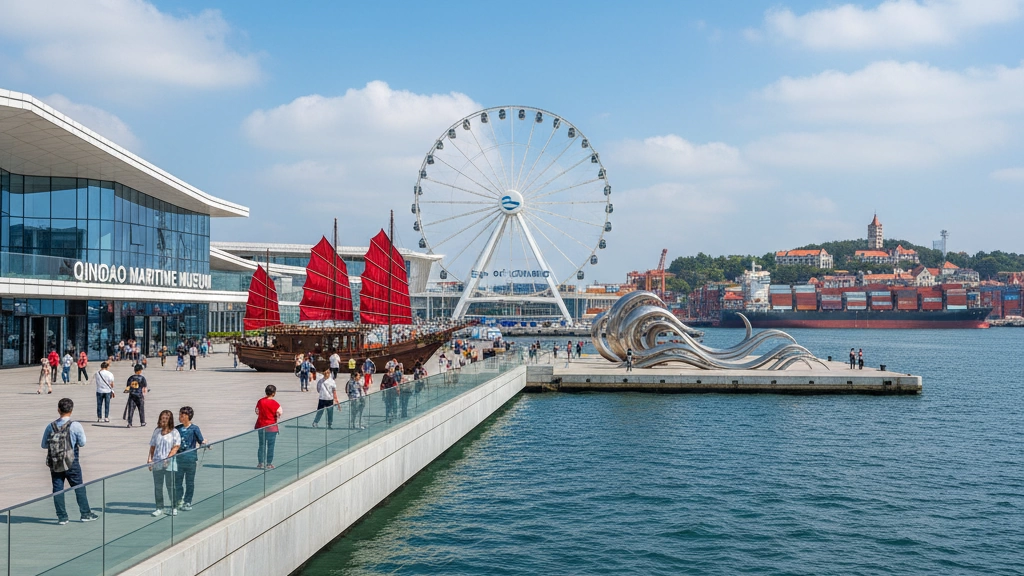
When I plan time around China Qingdao port, I treat the waterfront as my base and build out from there. You can easily mix quick walks off the ship with full-day trips that show off why Qingdao is one of the most underrated coastal cities in China.
Qingdao waterfront attractions
Right on the Yellow Sea, the waterfront is clean, walkable, and easy to navigate even on a short layover.
- Head to the Qingdao Olympic Sailing Center for kayaking, sailing lessons, or a simple harbor walk with skyline views. It’s modern, well-marked in English, and a soft landing if it’s your first time in China.
- Stroll through Badaguan, the classic German colonial district, to see tree-lined streets and historic villas that hint at older Tsingtao port history. It’s a good spot for photos and a slow walk away from port traffic.
- If you want more ideas in one place, I like to group the Olympic Sailing Center, Zhanqiao Pier, and nearby viewpoints as core stops from the list of top Qingdao attractions.
Culture, beer, and parks
If you’re into local culture and food, you’ll get a lot for a relatively short time investment.
- Tour the Tsingtao Beer Museum for a quick hit of history plus tastings. The exhibits explain how German colonial Qingdao shaped the brewery, and the taproom at the end is very approachable for U.S. visitors.
- Walk Zhongshan Park in spring for cherry blossoms, or any season for teahouses and quiet trails. It pairs well with a half-day city loop from the port if you’re trying to keep things light.
- For families or anyone curious about regional history, I recommend the Navy Museum, which covers maritime history, warships, and Qingdao’s role as a Yellow Sea maritime hub.
Day trips and adventure beyond the harbor
If you have a full day free from Qingdao port, step outside the urban core.
- Mount Laoshan is the go-to for hiking, ocean views, and Taoist temples. Expect well-marked trails, cable cars in key areas, and simple local food stands. It feels like a completely different world compared with the automated container terminal Qingdao is known for.
- Private tours are easy to book and worth it if you want to hit Laoshan, the Navy Museum, and a waterfront dinner in one efficient loop. I usually suggest this route for cruise passengers who don’t want to worry about local transfers.
Hidden gems and sustainable choices
If you like to get closer to daily life around China Qingdao port, there are a few low-key spots that still stay practical for U.S. travelers.
- Check out seafood markets near the port edge in the late afternoon. You can watch bulk cargo handling in the distance while locals buy live shellfish and fish caught that day.
- Look for restaurants that highlight “green” or “eco” sourcing. Qingdao’s push toward a greener Belt and Road Initiative port includes cleaner operations and more sustainable seafood options; supporting those places is an easy win.
- For a simple sunset plan, I’ll often recommend a walk along the waterfront followed by dinner near the beaches listed in most Qingdao beach guides. It’s relaxed, doesn’t require much planning, and still gives you a strong feel for Qingdao port tourism without straying far from your ship or hotel.
Practical Essentials for Staying Near China Qingdao Port
Where to Stay Near Qingdao Port
You’ll find plenty of places around Qingdao port that work for a quick stopover or a longer stay.
Waterfront hostels (~CNY 200 / $30 per night):
- Simple, clean rooms, often with shared bathrooms
- Great if you’re backpacking, on a layover, or watching your budget
- Look for spots in the old town and near the waterfront for easy access to buses and the cruise terminal
Bayside hotels and resorts:
- Mid-range and luxury hotels line the bay with sea views
- Easy access to the Yellow Sea waterfront, business districts, and port areas
- Better soundproofing (helpful if you’re near cargo zones) and more English-speaking staff
- Good pick if you’re on a cruise, business trip, or tight schedule
Quick tips when booking:
- Check how far your hotel is from the cruise terminal or cargo gates (they’re not always walkable)
- Filter for “port shuttle” or “cruise transfer” if you’re arriving by ship
- In summer and during major holidays (Golden Week, Spring Festival), book early—prices can jump fast
Eating Around Qingdao Port: Seafood, Beer, and More
Qingdao is a serious food city, especially if you like seafood and beer.
What to try near the port:
- Yellow Sea seafood: clams, scallops, razor clams, grilled squid, steamed fish
- German-style pubs and beer gardens: a nod to the city’s colonial past, with sausages, schnitzel, and draft beer
- Casual worker canteens: no-frills spots around industrial zones where port workers eat—cheap, filling, fast
If you care about local culture, it’s worth reading up on Qingdao’s food traditions and beer culture before you go. I keep a deeper guide on both local dishes and beer history here:
- Local food and eating customs → Qingdao food culture guide
- Where to actually sit down and eat → curated Qingdao restaurant picks
Vegan and vegetarian options:
- Many places have veggie stir-fries, tofu dishes, and simple rice/noodle bowls
- Ask for:
- “no meat” (bù yào ròu / 不要肉)
- “no seafood” (bù yào hǎixiān / 不要海鲜)
- Look for Buddhist or “vegetarian” (sùshí / 素食) restaurants in the main downtown area if you want fully plant-based menus
Safety and Sustainability Near Qingdao Port
You’re in an active industrial area, so stay a bit more alert than you would at a normal beach town.
Weather & typhoon season (June–September):
- Sudden heavy rain and strong winds can hit around the Yellow Sea
- Check forecasts daily if you’re sailing, cruising, or doing boat tours
- Build buffer time into flight and rail connections during peak storm months
Practical safety notes:
- Industrial zones are not built for walking—avoid wandering near heavy truck traffic, cranes, or unmarked port roads
- Use official taxis, Didi (China’s Uber), or hotel-arranged transfers, especially at night
- Keep copies of your passport and visa; many port-adjacent areas may do ID checks
Health basics:
- Bottled water is cheap; use it if you have a sensitive stomach
- Street seafood is great, but choose busy stalls with high turnover
- If you’re on a tight cruise schedule, avoid anything sketchy before sailing days
Green port initiatives to know about:
Qingdao has been pushing hard on “smart green port” upgrades:
- Low-emission AGVs (automated guided vehicles) move containers with less fuel burn
- Shore power and cleaner equipment cut down on port-side emissions
- Hydrogen buses and pilot hydrogen-powered equipment reduce local pollution
As a visitor, you can support this by:
- Using public transport or shared rides when possible
- Skipping disposable plastics (bring a refillable bottle, reusable bag)
- Choosing hotels that promote sustainability or energy-saving policies
Budget Breakdown: What a Day Around Qingdao Port Might Cost
Here’s a quick reference using CNY with rough USD equivalents for U.S. travelers.
| Category | Budget Option | Mid-Range / Comfortable |
|---|---|---|
| Accommodation (night) | Hostel: CNY 200 (~$30) | Hotel: CNY 450–900 (~$60–$125) |
| Local transport | Bus/metro: CNY 2–6 (<$1) | Taxi/Didi in city: CNY 20–60 ($3–$8) |
| Port → downtown taxi | CNY 30–60 ($4–$8) | — |
| Meals | Worker canteen/street food: CNY 25–45 ($4–$7) | Restaurant dinner with seafood & beer: CNY 90–200+ ($12–$28+) |
| Coffee / soft drink | CNY 15–30 ($2–$4) | Western cafés: CNY 30–45 ($4–$6) |
| Attraction entry | Many parks free; paid sites: CNY 20–80 ($3–$11) | — |
Simple rule of thumb:
- Shoestring traveler: CNY 250–350/day ($35–$50), not counting flights
- Comfort-focused traveler: CNY 600–1,000/day ($85–$140) with nicer stays and seafood dinners
If you plan around these basics—where you’ll sleep, what you want to eat, the typhoon window, and your daily budget—you’ll have a smooth, low-stress stay right on the doorstep of China’s Qingdao port.